
Open vents can introduce warm, moisture-laden air that condenses on cooler ducts, plumbing and wood framing.
Winchester’s complete moisture-control solution
Crawl Space Encapsulation in Winchester, KY
Phoenix designs crawl-space systems around the actual moisture source—not a one-size-fits-all package. We combine drainage, sump pumps, mold remediation, reinforced vapor barriers, sealing and dehumidification for Winchester and Clark County homes.
- IICRC Certified Firm
- InterNACHI Certified Mold Inspector
- Local Central Kentucky service
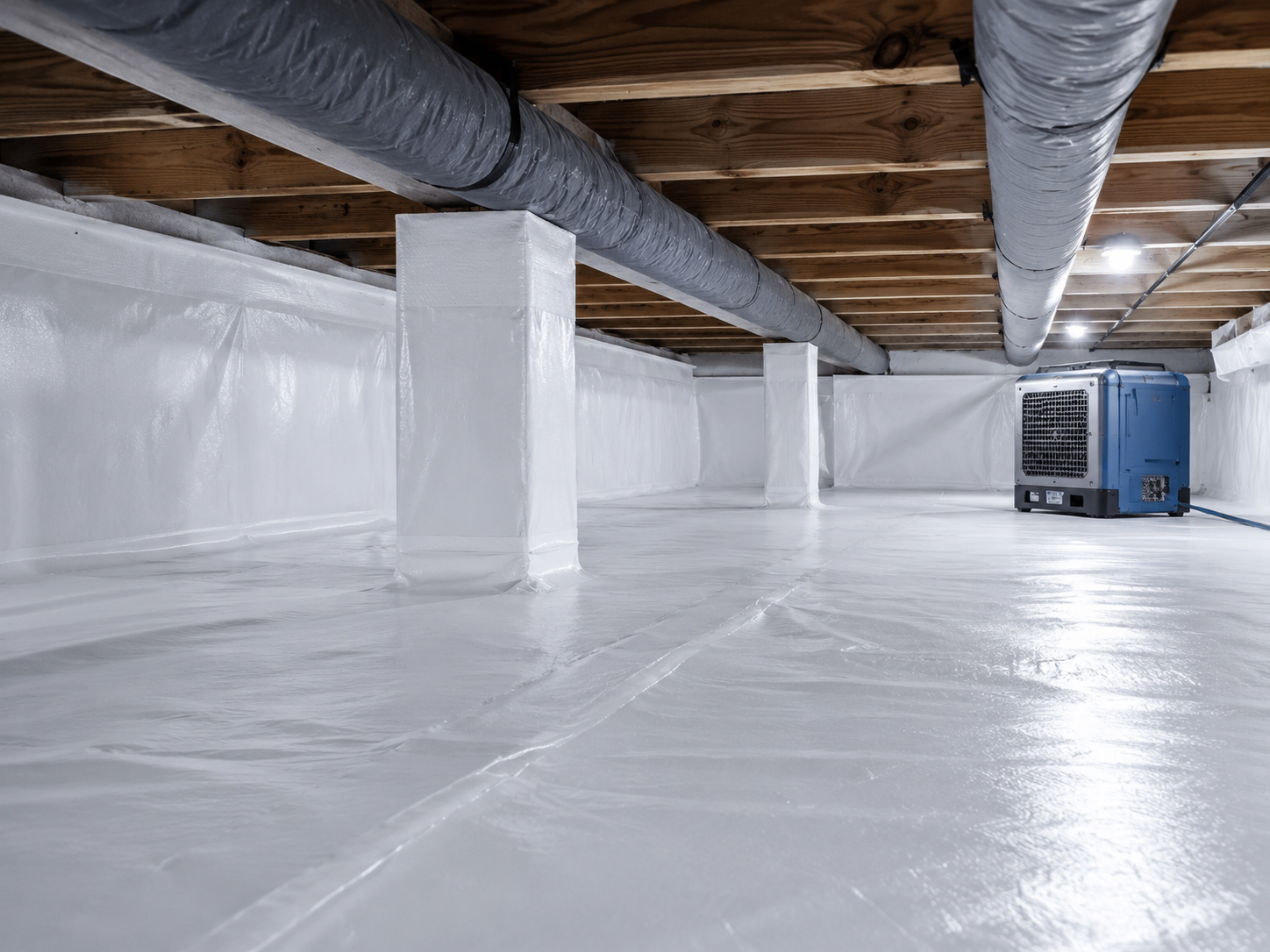
Inspect first. Control moisture for the long term.Every recommendation starts with water pathways, humidity, wood moisture and existing crawl-space conditions.
IICRC CertifiedRestoration-trained evaluation
InterNACHI CertifiedProfessional mold inspection
Photo DocumentationClear findings and final review
Written ScopeRecommendations based on inspection
Winchester & Clark County conditions
What is putting moisture under your home?
Crawl space moisture control in Winchester, KY starts with identifying how water and humid air reach the structure. We look beyond the old plastic on the ground and evaluate the full building system.
Grading, gutters and short downspout discharge can concentrate stormwater beside Clark County foundations.
Bare soil, uncovered wall areas and loose seams allow moisture vapor to enter the crawl space continuously.
Plumbing leaks, HVAC condensate and inadequate drainage can keep materials wet even after a liner is installed.
More than a vapor barrier
A complete crawl-space moisture system
Your installation is scoped around the conditions found during inspection. Some homes need a sealed liner and dehumidifier; others need water collection, pumping and remediation before encapsulation begins.
Full Encapsulation
A continuous, sealed system across the crawl-space floor, foundation walls, piers, seams and penetrations to separate the space from ground moisture.
Vapor Barrier Installation
Reinforced liner options installed to fit your crawl space, with careful seam work and detailing around columns, utilities and access points.
Drainage Solutions
Interior collection paths, discharge planning and exterior drainage recommendations based on where water is entering and how it moves around the foundation.
Sump Pump Systems
Sump basin and pump recommendations for crawl spaces affected by recurring groundwater or stormwater, with discharge routing reviewed during inspection.
Crawl Space Dehumidifiers
Properly sized dehumidification and condensate drainage to help maintain controlled humidity after the crawl space is sealed.
Crawl Space Mold Remediation
When suspected microbial growth is present, remediation and moisture correction are addressed before the new encapsulation system is installed.
Crawl space mold remediation
We do not seal unresolved mold and moisture behind a liner.
If visible mold or suspected microbial growth is found, Phoenix develops the remediation and moisture-correction scope before the encapsulation installation. The goal is to clean affected structural materials, remove unsalvageable materials and correct the conditions that allowed the problem to develop.
- Moisture-source identification and wood moisture readings
- Containment and HEPA air filtration when appropriate
- HEPA vacuuming and detailed cleaning of affected framing
- Removal of damaged insulation and contaminated porous materials as scoped
- Drying and documentation before the final liner system is installed
Inspection to final walkthrough
Our Winchester crawl space encapsulation process
A detailed process protects your property and makes the scope easier to understand before installation begins.
Crawl-space inspection
We inspect accessible framing, subflooring, insulation, foundation walls, vents, plumbing, ductwork, existing liners and visible drainage conditions.
Moisture mapping
Wood moisture, relative humidity and visible water pathways are documented so recommendations match the conditions found beneath the home.
Written moisture-control plan
You receive a recommended scope covering cleanup, remediation, drainage, liner details, sealing, equipment and any known repair needs.
Water and drainage corrections
Standing-water concerns, sump needs, discharge routes, grading or downspout conditions are addressed before the space is sealed.
Cleanup and mold remediation
Debris, damaged materials and affected insulation are handled as scoped. Mold remediation is completed before installing the final barrier system.
Vapor-barrier installation
The liner is fitted across the floor and extended up walls and around piers as designed, with overlaps and penetrations carefully sealed.
Sealing and dehumidification
Vents and outside-air openings are addressed as appropriate, then the dehumidifier and condensate route are installed and set up.
Final walkthrough and documentation
We review the completed work, verify system operation and provide project photos and care recommendations for the installed system.
Encapsulation system example from the Phoenix service gallery.
Built around your property
Details matter below the floor.
Wall attachment, pier wrapping, seam placement, access doors, condensate routing and drainage connections all affect how the finished system performs. Phoenix documents the plan and completes a final review with you.
Request an inspectionQualified restoration professionals
Moisture and mold experience behind every recommendation
Encapsulation is most effective when the team understands structural drying, microbial remediation, drainage and building moisture—not just liner installation.
IICRC Certified Firm
Phoenix operates as an IICRC Certified Firm with professional restoration standards guiding water, drying, mold and odor-control work.
InterNACHI Mold Inspector
Our inspection qualifications support detailed evaluation of visible growth, moisture sources, humidity and conditions that may support microbial growth.
Documented Recommendations
Photos, moisture readings and a written scope help you understand what is being proposed and why each component is included.
Qualifications include IICRC Water Damage Restoration Technician (WRT), Applied Structural Drying (ASD), Applied Microbial Remediation Technician (AMRT), Fire and Smoke Restoration Technician (FSRT), Odor Control Technician (OCT), InterNACHI Certified Mold Inspector and Xactimate Level 1 certification.
Winchester-specific answers
Crawl space encapsulation FAQs
How much does crawl space encapsulation cost in Winchester, KY?
Pricing depends on the crawl-space size, access, existing insulation and debris, liner thickness, wall and pier coverage, drainage needs, sump-pump work, mold remediation and dehumidifier requirements. Phoenix inspects the property and provides a written scope based on the conditions found.
Does every Winchester crawl space need a sump pump?
No. A sump pump is recommended when the inspection shows recurring liquid water, groundwater entry or a collection point that needs active discharge. A crawl space with primarily ground-vapor or humidity concerns may need a different moisture-control plan.
Should mold be remediated before crawl space encapsulation?
Yes, when mold or suspected microbial growth is present, the affected materials and the moisture source should be addressed before the new liner seals the crawl space. Encapsulation is a moisture-control system; it should not be used to conceal an unresolved contamination problem.
What causes crawl space moisture in Winchester and Clark County homes?
Common contributors include humid outside air entering through vents, exposed soil, heavy rain and stormwater, improper grading, short downspout discharge, plumbing leaks, condensation on cool ductwork and missing or damaged vapor barriers. The inspection is used to determine which conditions apply to your property.
What is included in a Phoenix crawl space inspection?
We review accessible framing, subflooring, insulation, humidity, wood moisture, standing water, visible microbial growth, vapor-barrier condition, foundation walls, vents, plumbing, ductwork and visible drainage conditions. Photos and a written recommendation are provided as appropriate.
Do I need a crawl space dehumidifier after encapsulation?
Many sealed crawl spaces benefit from controlled dehumidification, but equipment selection should follow the inspection. Phoenix considers crawl-space volume, moisture load, existing HVAC conditions, drainage and the completed sealing plan before recommending a unit.
Can encapsulation help with musty odors and high humidity?
Encapsulation can reduce ground-moisture and humid outside-air entry when it is paired with source correction, proper sealing, drainage when needed and dehumidification. Existing mold, wet materials or plumbing leaks must also be addressed.
Does Phoenix serve all of Winchester and Clark County?
Phoenix Remediation & Restoration serves homeowners in Winchester and throughout Clark County, as well as nearby Central Kentucky communities. Call or request an inspection online to confirm scheduling for your property.
Protect the space beneath your home
Request a crawl space inspection in Winchester, KY.
Call Phoenix or choose a time online. We will inspect the conditions, explain what we find and prepare a moisture-control recommendation for your property.